8 PM Eastern | 6 PM Mountain | 5 PM Pacific
LIVE ON ZOOM | $30
Explore the fascinating intersection of ESP, consciousness, and the search for answers to unexplained phenomena, including UFOs and possible extraterrestrial contact.
Psychic ability and extrasensory perception (ESP) have long been subjects of scientific inquiry, parapsychological research, and philosophical debate. These areas of study explore the possibility that individuals may acquire information through means not readily explained by the conventional five senses. Reported abilities include telepathy, clairvoyance, precognition, and remote viewing, all of which raise important questions about human consciousness, perception, and access to information.
The use of psychics to investigate or verify facts requires a careful distinction between obtaining information and independently confirming its accuracy. A psychic may provide details about a person, place, event, or circumstance that appear to be inaccessible through ordinary means. However, these claims must be evaluated through controlled testing, documented procedures, independent corroboration, and the elimination of alternative explanations such as prior knowledge, inference, chance, or information leakage. Psychic impressions may serve as investigative leads or hypotheses, but they should not be treated as established facts without independent verification.
An important figure in the history of ESP research is Uri Geller, the Israeli-born performer who became internationally known for his demonstrations of purported psychokinetic abilities, including spoon bending, and claims of telepathic perception. During the 1970s, Geller participated in experiments conducted by researchers at the Stanford Research Institute (SRI), including physicists Russell Targ and Harold Puthoff. Their investigations examined claims involving remote viewing and the acquisition of information about distant or concealed targets. These experiments attracted considerable attention and controversy, contributing to broader discussions about whether human perception might extend beyond the limits traditionally recognized by mainstream science.
Geller’s involvement is historically significant because it helped bring ESP research into public view and encouraged debate about the relationship between consciousness, information, and the physical world. At the same time, his demonstrations and the interpretations of the experiments remain subjects of scientific disagreement. The existence of reliable psychic abilities has not been established to the satisfaction of the broader scientific community, and questions about experimental controls, replication, and alternative explanations remain central to evaluating such claims.
Ultimately, the study of psychic ability invites an open but disciplined approach. Researchers may investigate unusual claims without accepting them in advance, using rigorous methods to distinguish subjective impressions from reproducible results. Whether psychic perception ultimately proves to be a genuine human capacity or reflects mechanisms not yet fully understood, the essential question remains:
Can information be obtained through means beyond ordinary sensory perception, and can that information be independently verified? Addressing this question requires curiosity, skepticism, and a commitment to evidence.
ABOUT THE PRESENTERS
Dr. Polly Palmer is an educator, anthropologist, and lifelong explorer of human consciousness, alternative perspectives, and the many ways people experience and understand the world. With a BA in English, a master’s degree in Anthropology, and a PhD in Multicultural Education from the University of Colorado Boulder, she has spent decades exploring the intersections of culture, creativity, learning, and human potential.
Polly taught high school English and language arts for more than 35 years before serving as a professor of English at the American University of Sharjah in the United Arab Emirates from 2007 to 2014. Her intellectual curiosity has taken her well beyond traditional academic disciplines. She studied at Naropa Institute in Boulder during its early years, exploring Tibetan studies, Tai Chi, and Asian literature, among other subjects. Since moving to Boulder in 1976, she has continued to investigate a wide range of metaphysical, consciousness-related, and alternative approaches to understanding human experience.
Her interests have included UFO phenomena, psychotronics, meditation, NLP, energy-based practices, and techniques for expanding awareness and creative potential. She has also developed and presented workshops exploring creativity, perspective shifts, and approaches to personal transformation.
Bringing together an academic foundation, decades of teaching experience, and an enduring openness to unconventional ideas, Polly offers a thoughtful, cross-disciplinary perspective on questions of perception, consciousness, and the possibilities of human experience.


-

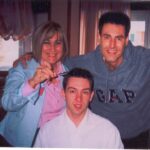
- Uri Geller



-

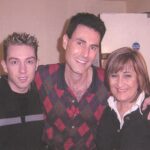
- Paola Harris & Uri Geller